

At the Heart of Belgian Science
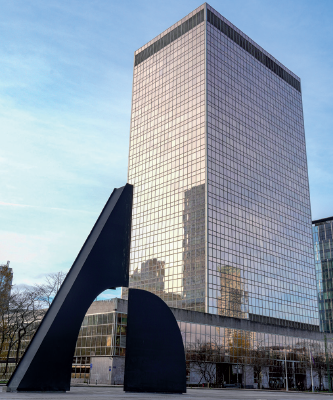
What do Belgium’s weather forecasts, the dinosaurs, the nationwide university Wi-Fi network in Belgium, and the
restoration of the Van Eyck brothers’ Mystic Lamb all have in common?
All these public services and treasures of the country’s heritage are supported by
the Science Policy PPS (BELSPO). With 2,500 staff members spread across
BELSPO, ten federal scientific institutes as well as Belnet, our institution is driving
research while preserving its world-renowned heritage.
These institutions include museums that welcome 1.5 million visitors a year, where
science comes to life for both young and old. But that’s just a part of the mission.
At BELSPO, every scientific project, whether in space, biodiversity, heritage or digital
innovation, helps us gain a better understanding of the world we live in and prepares
us for a better future.
The History of Belgium
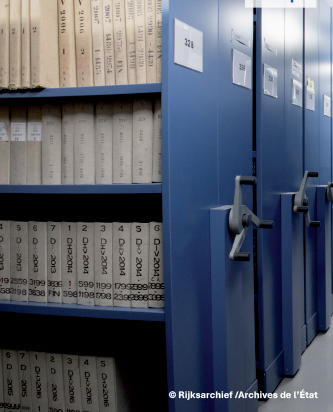
The State Archives (SA) have twenty repositories located across Belgium. Each
repository has a reading room open to the public, where archives can be consulted.
In addition, a growing part of the collection is available online, covering 411
linear kilometres of analogue archives. The SA contribute to effective information
management within federal public services.
Through the AGATHA search engine, the SA provide access to historical documents
online. CegeSoma, the SA’s centre of expertise on 20th-century conflicts, hosts a
platform dedicated to the Belgian Resistance during the Second World War.

Belgium’s Documentary Memory
KBR is the guardian of a cultural and historical heritage of exceptional richness.
Its collections, comprising over eight million items, include books, manuscripts,
newspapers, prints, musical scores, coins, and maps. KBR also offers a rapidly
growing digital collection, providing researchers and the general public with access
to a true treasure trove of information.
The library makes its collections accessible not only in its reading rooms, but
also through online platforms, exhibitions, conferences, and a diverse cultural
programme. It thus serves as a vibrant meeting place for anyone interested
in heritage, knowledge, and culture. By actively sharing its collections and
expertise, KBR aims to create connections between individuals, communities, and
generations.
Protecting Art from the Ravages of Time
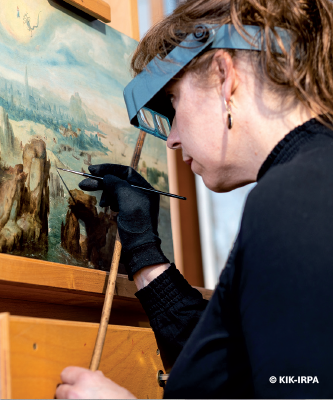
Since its creation, the Royal Institute for Cultural Heritage (KIK-IRPA) has been
dedicated to the study and conservation of the country’s artistic and cultural heritage.
Paintings, wood and stone sculptures, textiles, ceramics, glass… even the
buildings are examined and restored here.
KIK-IRPA leads large-scale projects such as the restoration of the Mystic Lamb by the
Van Eyck brothers. The Institute is also developing innovative solutions to protect
art in the face of climate change, and participates in the ECHOES programme, the
European Cultural Heritage Cloud. Its BALaT database offers access to thousands
of photographs of Belgian heritage, freely available to all.

Art and World History
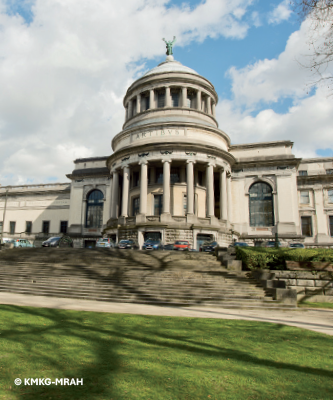
The Royal Museums of Art and History (RMAH) comprise three museums in
Brussels: the Art & History Museum, the Musical Instruments Museum and the
Halle Gate. The Art & History Museum, located in Cinquantenaire Park, is the
largest in the country. Its rich collections include European and global treasures,
including an Easter Island statue and the objects that inspired Hergé to create the
world of Tintin.
The RMAH boast renovated spaces, such as the Americas Galleries and the
18th-Century Decorative Arts Galleries, and also regularly host prestigious temporary
exhibitions.
Art Through the Centuries
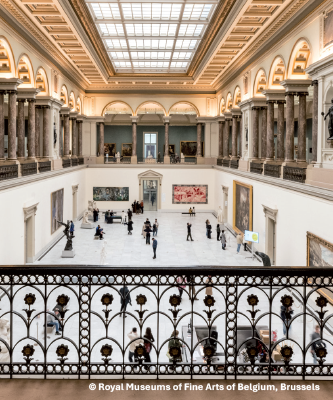
The Royal Museums of Fine Arts of Belgium (RMFAB) comprise four entities: the
renowned Magritte Museum, the Old Masters Museum, the Wiertz Museum, and the
Meunier Museum. Located in the heart of Europe’s capital, welcoming over 700,000
visits each year, these museums are the most visited in Belgium.
The RMFAB’s prestigious collections, boasting more than 24,000 works, trace the
history of visual arts from the 15th to the 21st century. The "Beaux-Arts" contribute
to international touring exhibitions and collaborate closely with the Centre
Pompidou. In a nod to Magritte, Belgium’s best-known surrealist painter, a giant
apple adorns the roof of one of the buildings in this museum complex, founded
under Napoleon in 1801.

The Wonders of Nature Past and Present
The Royal Belgian Institute of Natural Sciences (RBINS) carries out significant scientific
research activities and manages the third-largest natural sciences collection in
Europe. It welcomes the public through its permanent and temporary exhibitions.
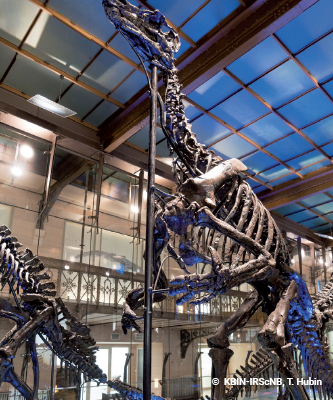
The Institute is world-famous for its Dinosaur Gallery, the largest in Europe.
The RBINS combines cutting-edge research with a commitment to society, through
its partnership with NASA, the organisation of the Mass Extinction Conference, its
role as Belgium’s focal point for global biodiversity, among other initiatives.
The Culture, Nature and Heritage of Central Africa
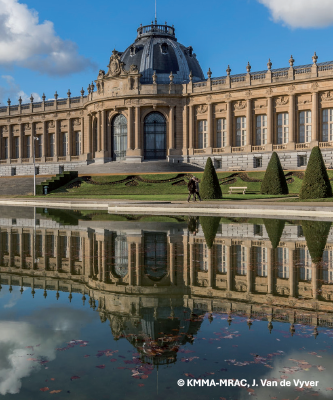
The Royal Museum for Central Africa (RMCA), also known as the AfricaMuseum,
is both a museum and research centre promoting the study of, and dialogue on
societies and the natural environment in sub-Saharan Africa. It is a place of memory
and reflection on the colonial past, but it also engages with the Africa of today and
tomorrow.
The RMCA houses some truly exceptional collections: 50 million animals and
insects, 1 million fish (the largest collection of its kind in the world) and 8,000 African
musical instruments. The museum is currently developing an ambitious 2024-2029
cooperation programme with its partners in the Democratic Republic of Congo,
aiming to strengthen South-South scientific and cultural exchanges to address
tomorrow’s global challenges.

Atmosphere and Space
The Royal Belgian Institute for Space Aeronomy (BIRA-IASB) studies the
atmosphere of the Earth, other planets and comets. It analyses the key processes that influence
our environment and space weather phenomena. The Institute’s scientific expertise
contributes to advancing our understanding of the challenges of space exploration,
as well as those related to our own planet.
BIRA-IASB plays an essential role in international space missions in partnership
with the European Space Agency, providing measurement instruments and scientific
expertise. The monitoring of planets, the Sun, the Earth and human activity
illustrates the concrete impact that space research has on our daily lives.
The Universe and the Earth
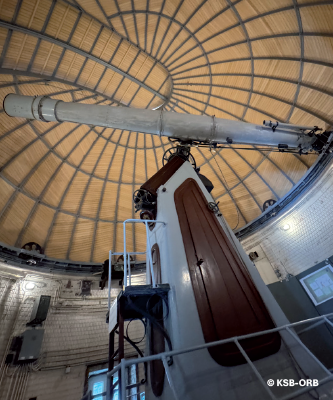
The Royal Observatory of Belgium (ROB) is a scientific institution that studies the
Earth, the Sun and many other celestial objects. Astronomy, astrophysics, geophysics,
seismology and solar physics are all disciplines covered by the Observatory, which
also operates the Planetarium at Heysel.
Founded in 1826, ROB is involved in ambitious space missions such as Proba-3,
which studies the Sun’s corona, and Hera, which aims to deflect an asteroid. Its
seismographs detected a mysterious nine-day-long tsunami in Greenland, and
its scientists contributed to the discovery of a gigantic black hole. A 200-year-old
institution at the cutting edge of research!

Forecasting Tomorrow’s Weather
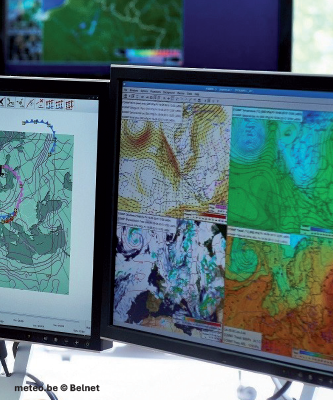
The mission of the Royal Meteorological Institute of Belgium (RMI) is to provide
reliable weather, climate and geophysical services, based on high-quality observations
and research, in a context of national and international cooperation.
The RMI contributes to the operation of Europe’s most advanced meteorological
satellites (Meteosat MTG). In collaboration with the Belgian Climate Centre, it
provides the scientific community with access to historical climate data. In addition
to weather forecasts, the RMI’s mobile app also provides four-day pollen forecasts
for each Belgian municipality.
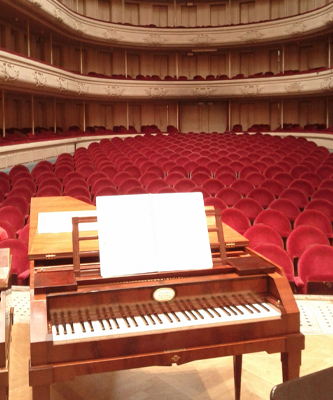
The Royal Conservatory of Brussels has housed a library since its foundation in 1832. Today, it is part of both the French-speaking Conservatoire royal de Bruxelles and the Dutch-speaking Koninklijk Conservatorium Brussel – School of Arts Erasmushogeschool. With more than 1.5 million documents, it constitutes the largest public music collection in Belgium, bringing together scores, manuscripts, archives, and iconographic, audiovisual, and digital resources. As a unique centre in Belgium for music information, consultation, and lending services, its mission is to enrich, preserve, study, promote, and provide access to its collections at the intersection of higher education, research, and service to the community.
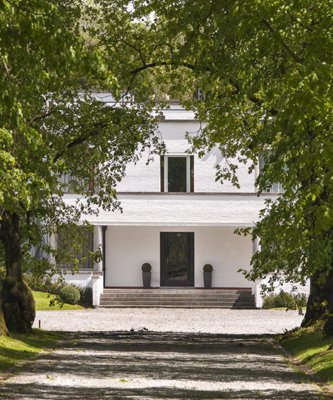

The Music Chapel owes its existence to two strong personalities: Queen Elisabeth, herself a violinist eager to support young talent, and Eugène Ysaÿe, one of the most prominent violinists and composers of his era. Even though he did not live to see its creation, his concept of top-tier mentorship inspired the Queen. Together, they sought to empower rising Belgian artists by establishing a world-class institution and an international music competition.