The AstroSounds project is a joint initiative of the physics teacher training programme of UCLL Diepenbeek and Katrien Kolenberg at KU Leuven, the University of Antwerp and the Vrije Universiteit Brussel, with colleagues from PXL and the Planetarium of the Royal Observatory of Belgium, with the support of the Flemish Government.
Would you like to know more? Scan the code, browse the website astrosounds.be read everything about the AstroSounds Citizen Science Project.
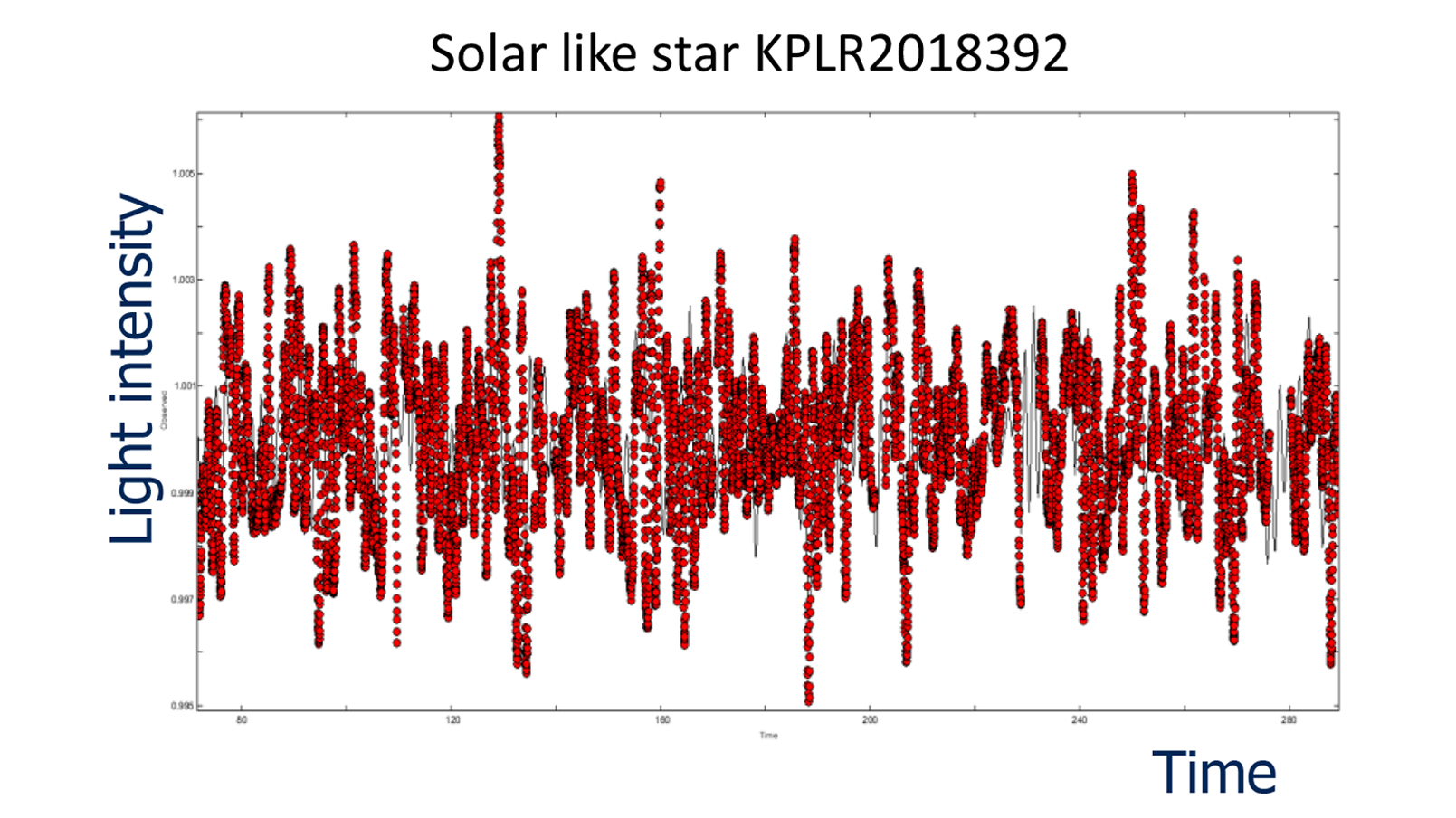
Our Sun is in the prime of its life. It was ‘born’ about 4.6 billion years ago and is far from dying;
that will take several more billion years. The Sun continues to shine because it gets its energy from
nuclear fusion deep in its core.
There, hydrogen nuclei are converted into helium nuclei, whereby a very small amount of mass is converted
into a lot of energy. The outer layers of the Sun are swirling or boiling, as it were. These movements
cause the entire Sun to vibrate or ‘bubble’ to the rhythm of its own melody. We call these sun-like
vibrations.
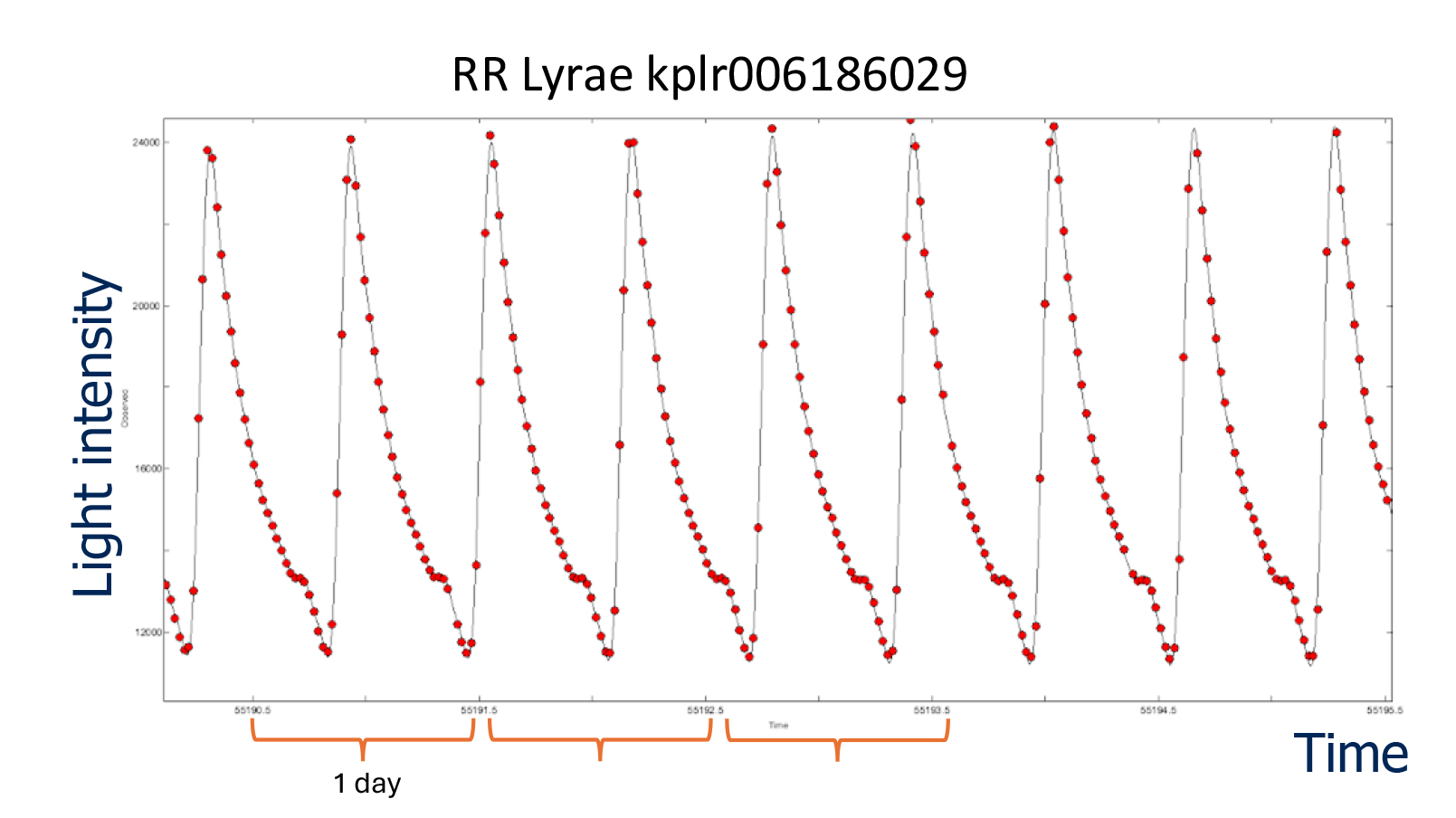
RR Lyrae stars are ‘old’, retired stars. They have already passed the Sun’s life phase and have grown a
lot in size. Yet they are less massive: their mass is just over half that of the Sun. RR Lyrae stars have
already used up all their hydrogen in the core and are fusing helium.
Their vibrations are due to the interaction of radiation emitted inside the star with the star’s layers.
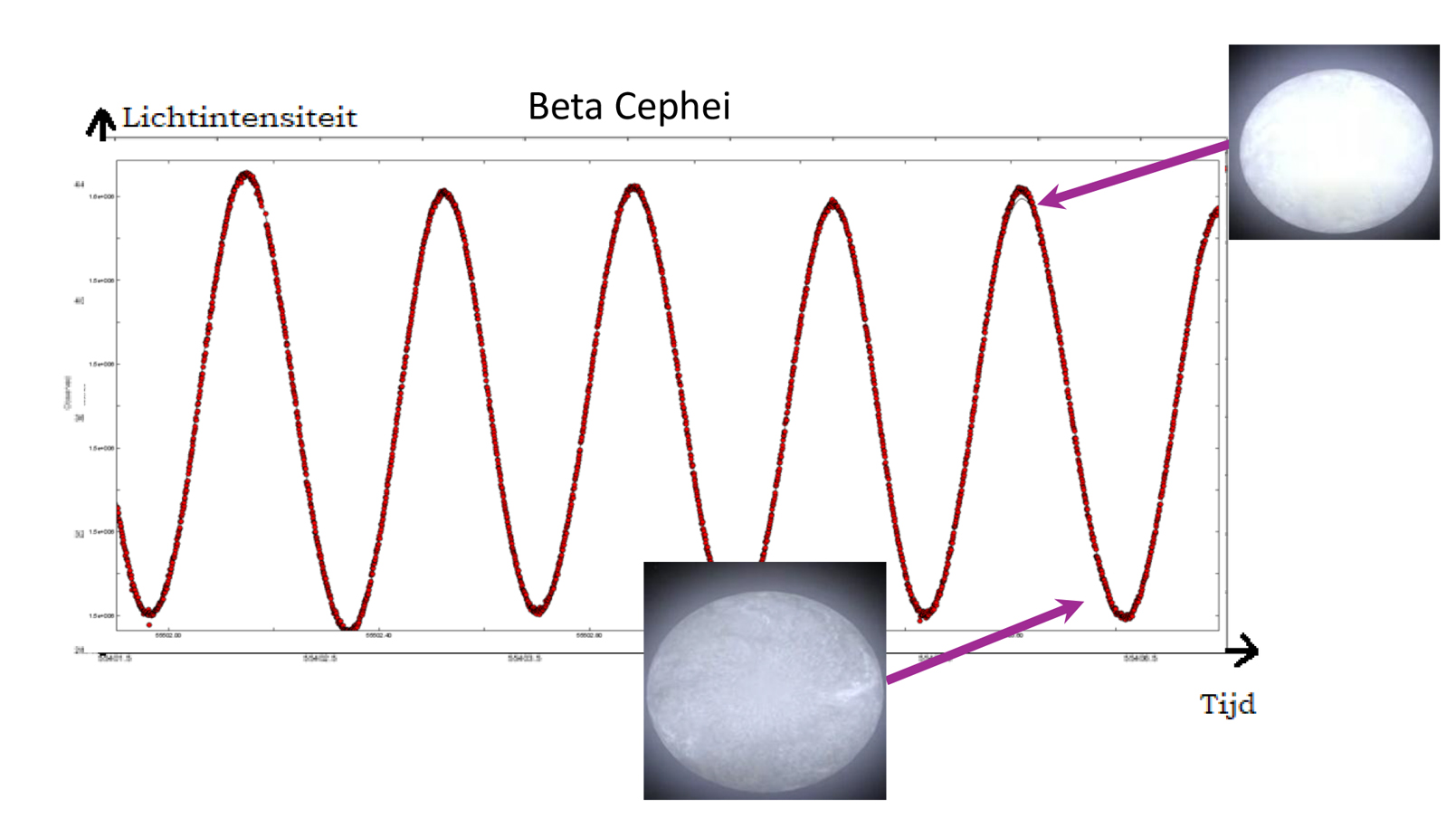
Beta Cephei stars are young, massive stars that are in the early stages of their life. They are significantly larger than the Sun and have a mass ranging from 7 to 30 times that of our star. Unlike RR Lyrae stars, Beta Cephei stars are still fusing hydrogen in their cores. They are characterised by small brightness fluctuations with periods of typically a few hours.
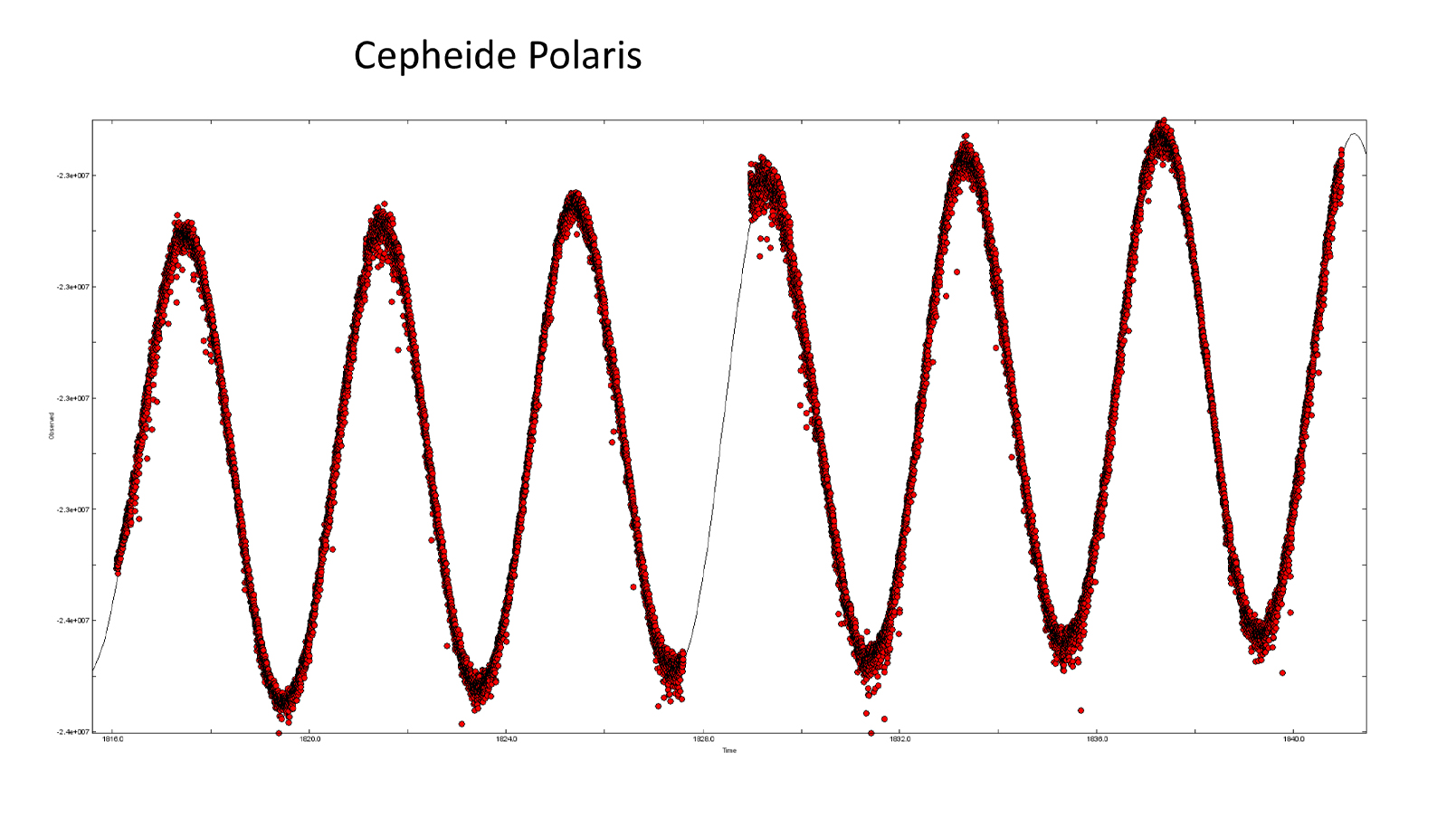
Classical Cepheid stars are massive, luminous stars that are in a more evolved stage of their life cycle
compared to the Sun. They typically have a mass ranging from 3 to 15 times that of the Sun.
They are characterised by their pulsational instability, which leads to significant variations in
brightness. As the pulsation periods of classical Cepheids are linked to their luminosity, they are
essential tools for measuring cosmic distances.
| Stars | Sun-like stars | RR Lyrae stars | Beta Cephei stars | Classical cepheid stars |
|---|---|---|---|---|
| Vibration period | 5 minutes on average | from a few hours to one day | from 2 to 10 hours | from 2 to 150 days |
| Approx. Radius | 700 000 km | 5 times larger than the Sun | 4 to 10 times larger than the Sun | Up to a few hundred times larger than the Sun |
| Surface temperature | 6000 °C | 6000–7500 °C | 18 000–35 000 °C | 4200–6200 °C |
| Age | approx. 4.6 billion of years | > 10 billion years | Typically a few million years | Typically 2 to 20 million years |
| Sound | Sounds like a gong | A clear tone like a violin | A clear, ethereal tone, akin to a flute | A rich, resonant tone, reminiscent of a deep bell or an oboe |