UNKNOWN CREATOR, BONDO REGION, BAS-UELE, DR CONGO
Xylophone of Chief Guga, 1912
Wood (Pterocarpus), gourds, rope
23 x 73 x 66 cm
Coll. RMCA, inv. MO.0.0.14308
This manza xylophone belonged to Guga, an Azande chief from the northern region of what is now the Democratic Republic of Congo. In 1911-1912, the Belgian military officer Armand Hutereau (1875-1914) acquired the instrument. Since then, it has been preserved in the Royal Museum for Central Africa (RMCA) in Tervuren, together with sound recordings made by Hutereau.
The manza was an instrument of prestige, played exclusively by chiefs and notables during ceremonial occasions. Colonial rule eroded the authority and status of traditional leaders. As a result, much of the knowledge, prestige, and cultural memory surrounding the instrument was lost.
The fate of this musical tradition—and of intangible heritage more broadly—shows that the return of musical instruments alone is not enough. Reconnecting people with their musical heritage requires collaboration with musicians, communities, and researchers, as well as the possibilities offered by digitisation.
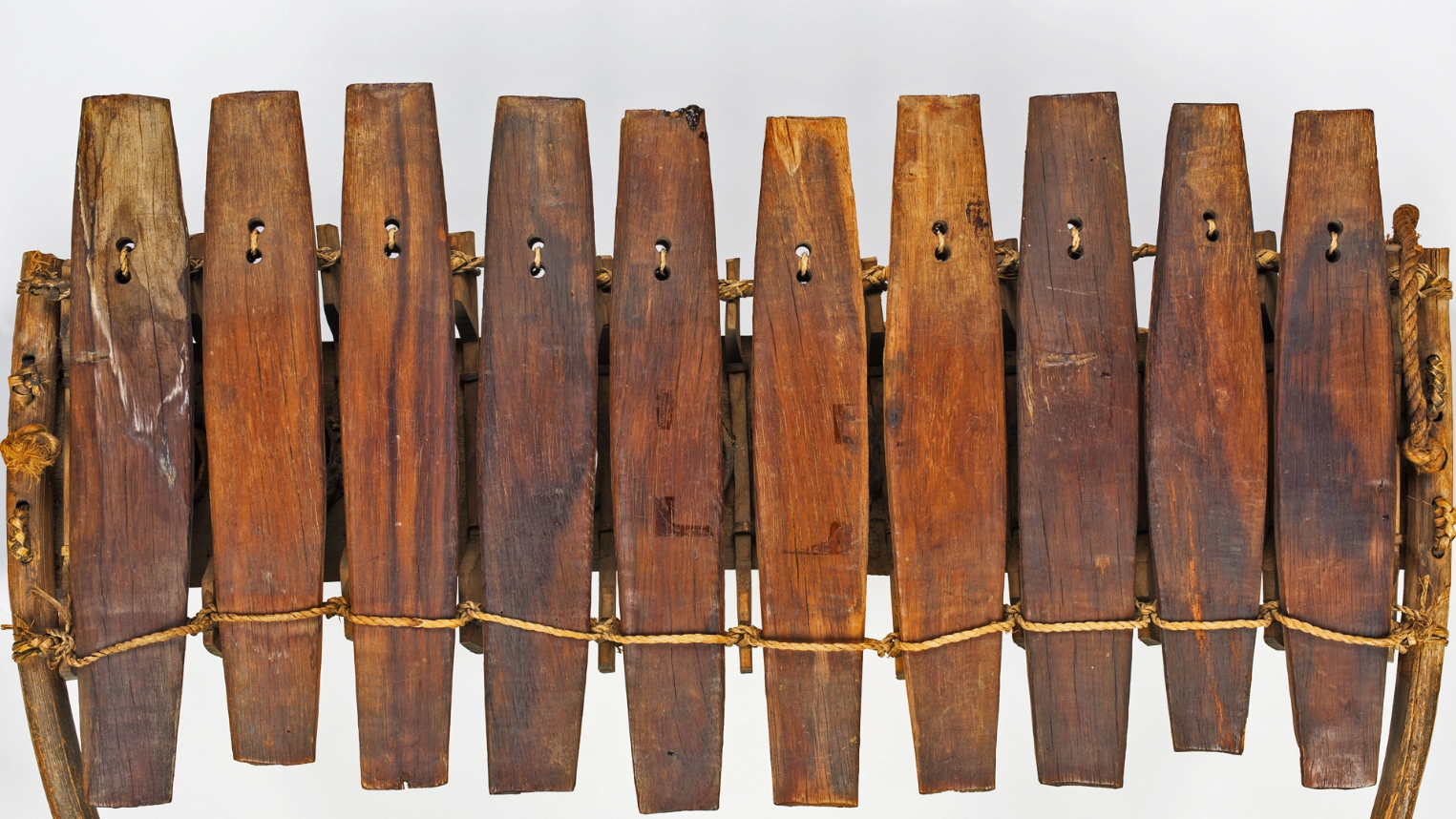
Click on the keys to hear the sound of the xylophone.
It works both on computers and on touchscreen devices.
Scan the QR code for use on smartphones and tablets.
On touchscreens, you can also play multiple notes simultaneously
by touching the keys with multiple fingers.

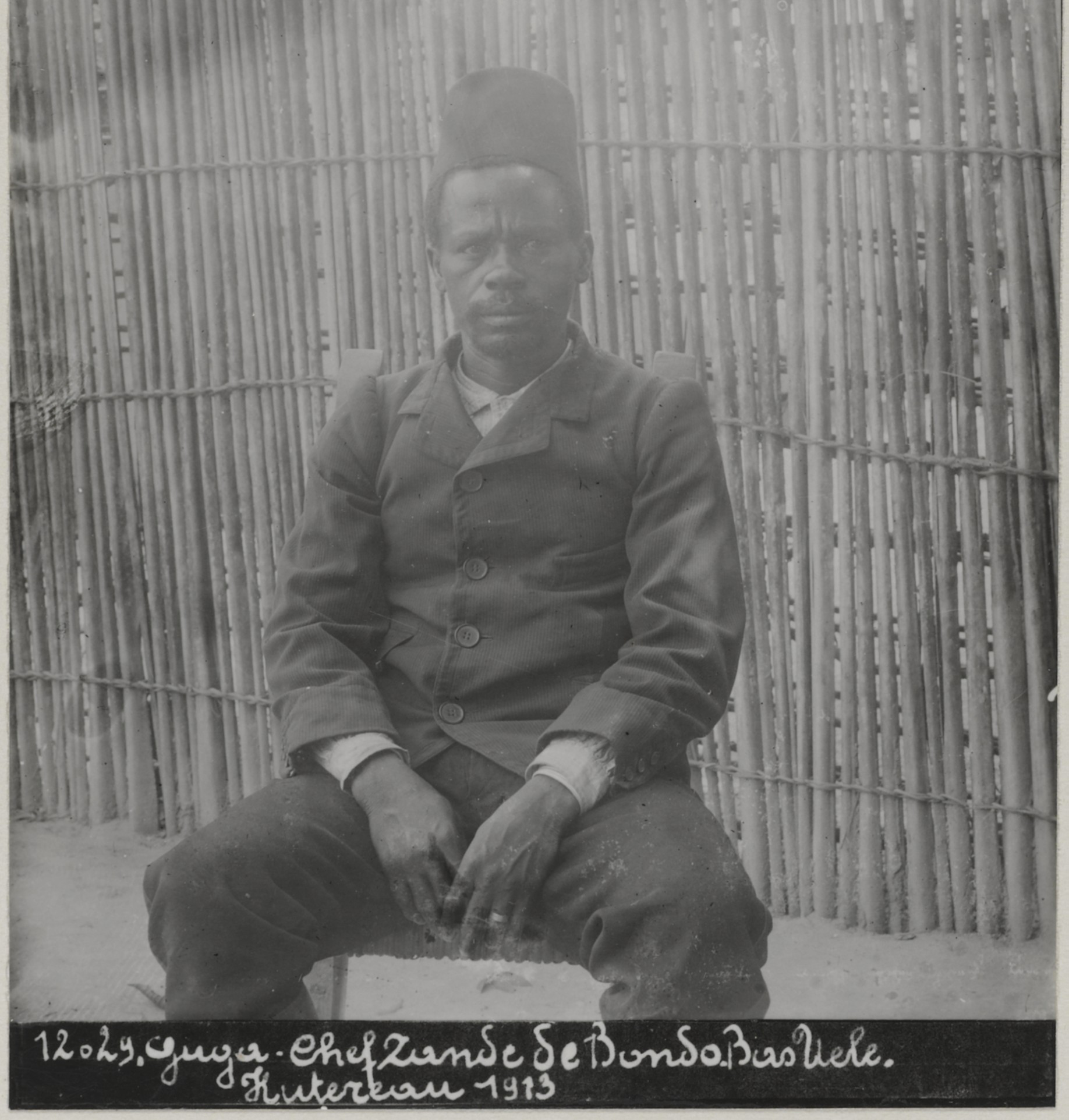
Chief Guga. Bondo, Bas-Uele, RD Congo.
Photographer A. Hutereau. December 1912-January 1913.
Coll. RMCA, AP.0.0.12029.
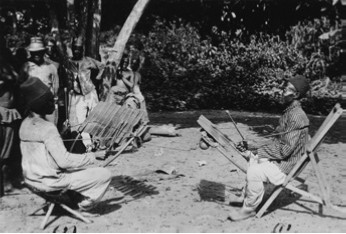
Chief Senza and his brother Kanga playing the manza at Bili.
Bili, Bas-Uele, RD Congo. Photographer A. Hutereau. 5-6 November 1912. Coll.
Coll. RMCA, EP.0.0.14694.
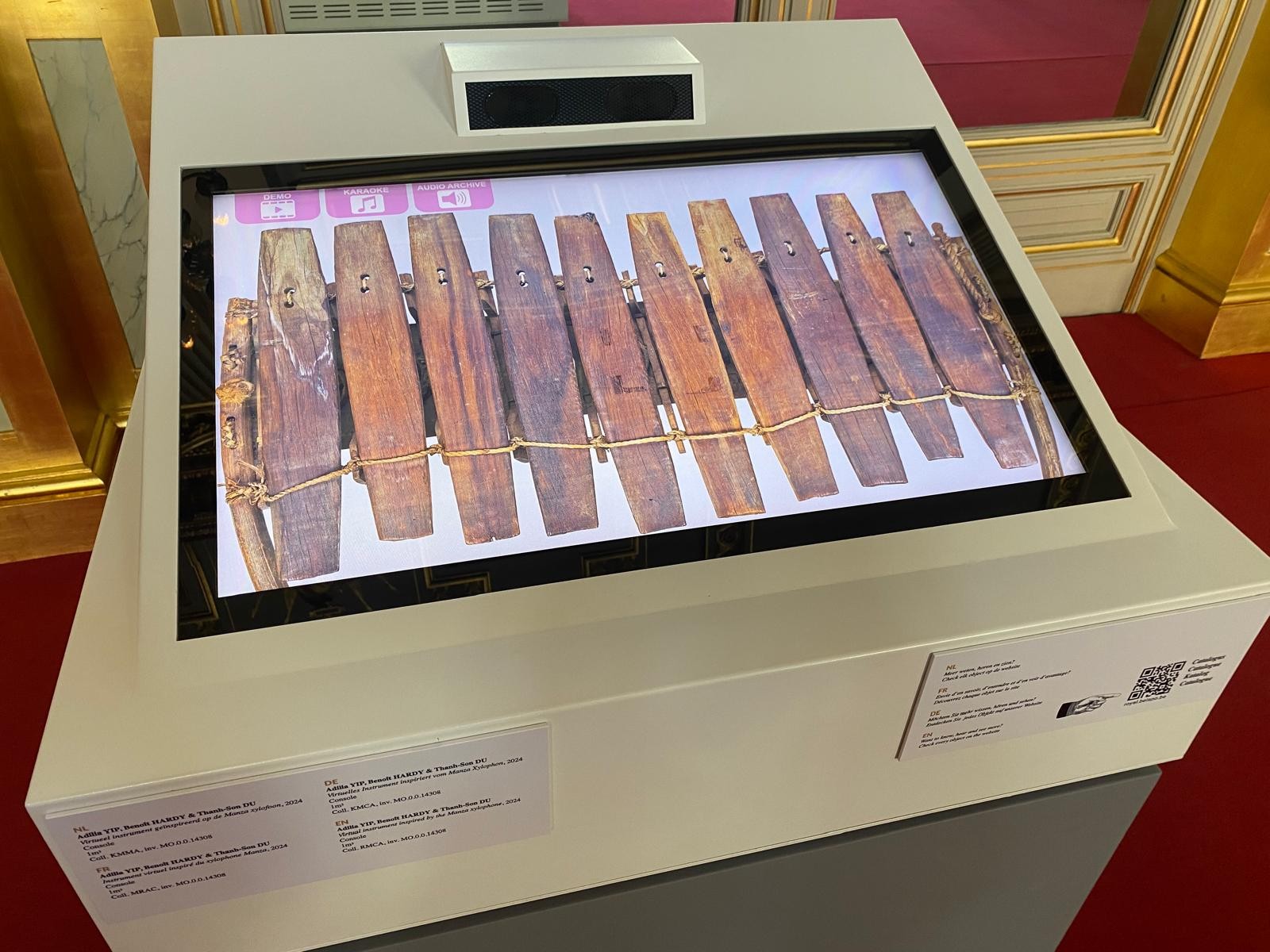
Adilia YIP, Benoît HARDY & Thanh-Son DU
Virtual instrument inspired by the Manza xylophone, 2024
Console
1m³
Coll. RMCA, inv. MO.0.0.14308
In this exhibition, you can play the manza through the interactive console and hear how it sounds, listen to a historical recording made by Hutereau, and learn to perform some of its melodies. You will discover that the instrument has ten tones arranged in five octave pairs, in zig-zag arrangement.
This project is the result of research carried out by the RMCA in dialogue with musicians from Africa, students and researchers from the Royal Conservatoire Antwerp, the Music Technology Department at McGill University in Montreal, and the Asia-Europe Cultural Curatorship Studies programme at the University of Antwerp.
Through sound sampling and Virtual Studio Technology (VST), participatory artistic processes explore new creative possibilities while raising awareness of musical instruments and traditions that have long been silenced.
Chris Mec Mr Tshongo Le Magnifique has created Yoka for the manza collection of the
Royal Museum for Central Africa, Tervuren in 2025.
Project ReSoXy: ReSounding the Xylophone Collection of RMCA.
https://resoxy.africamuseum.be

A short documentary on the creative process of Bantu Socializing:
People Together, a music project by Adon Geel for the manza collection of Royal Museum for Central Africa, Tervuren
Project ReSoXy: ReSounding the Xylophone Collection of RMCA.
https://resoxy.africamuseum.be