Daniel François Esprit AUBER (1782-1871);
Eugène SCRIBE (1791-1861)
The Mute Girl of Portici (La Muette de Portici)
Opera in 5 acts, 1828
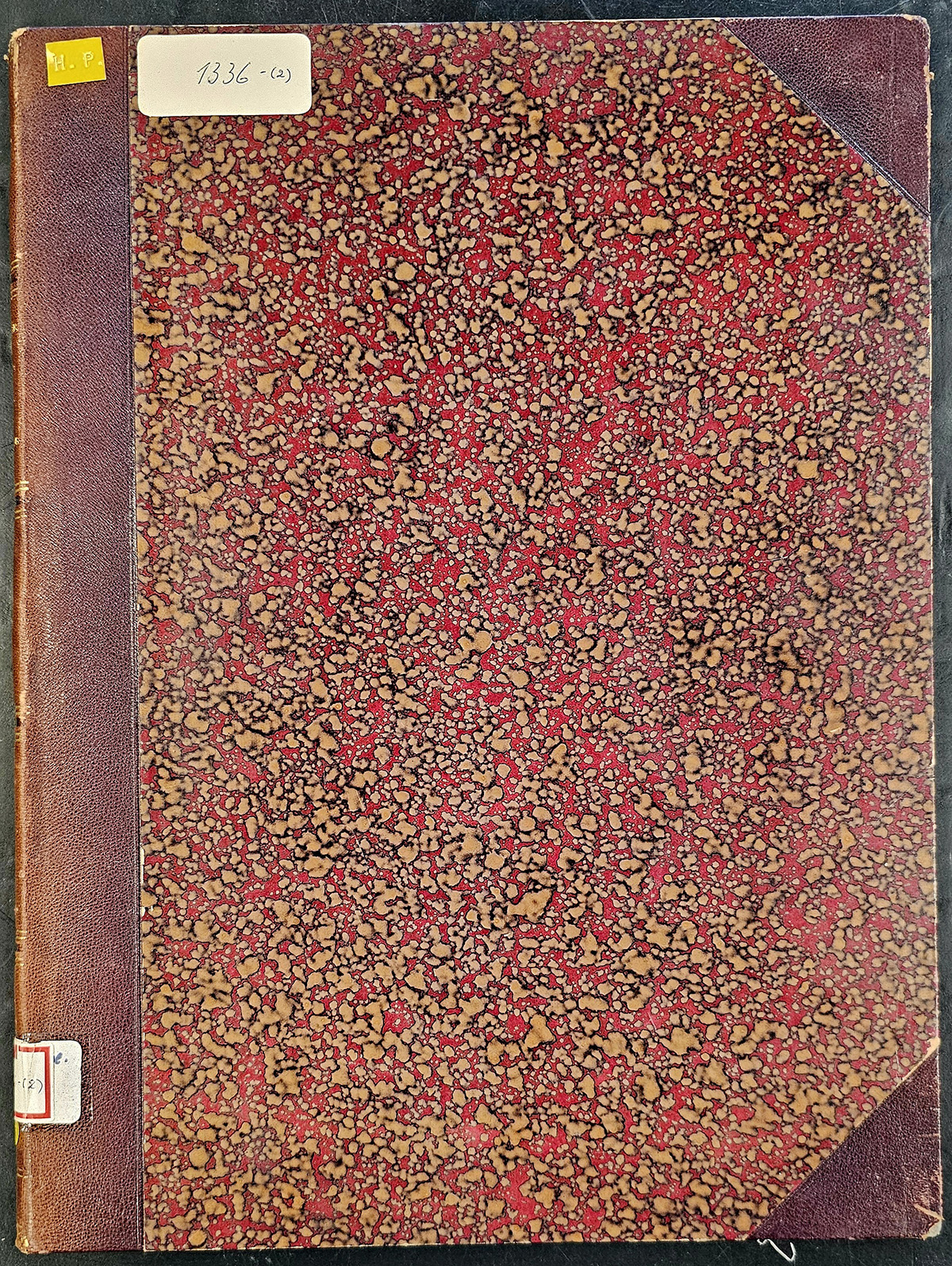
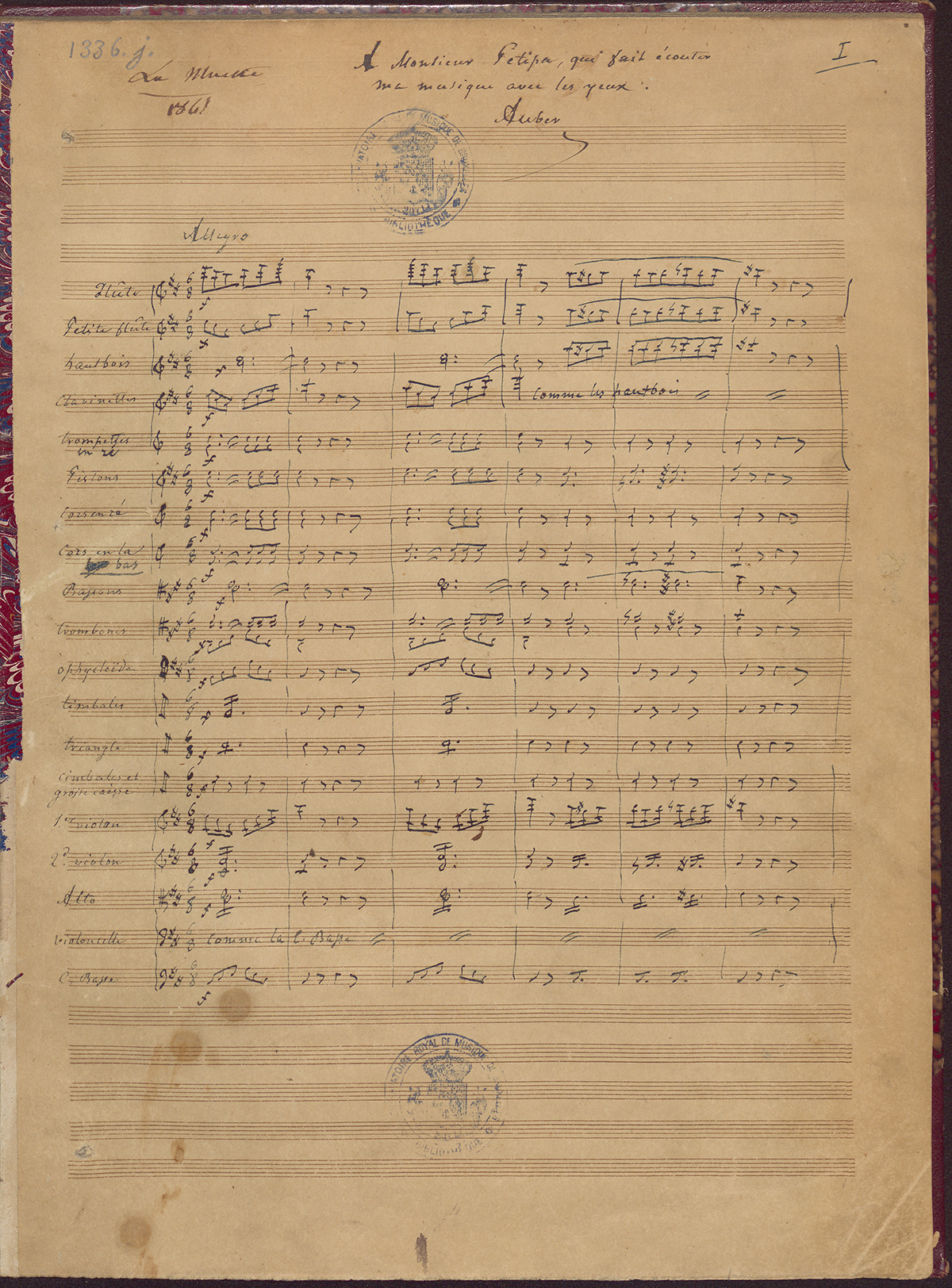
Autograph score containing dances
37 x 28 cm (opened: 37 x 56 - 60 cm)
Coll. Royal Conservatories Brussels, B - Bc 01336-(2)
Premiered in Paris in 1828, La Muette de Portici was intended as an instrument of political reconciliation: a grand spectacle designed to channel popular emotions and restore the image of authority. By portraying a Neapolitan revolt doomed to failure, its creators did not intend to encourage revolution. Yet the work had the opposite effect. The fusion of the arts, elevated by Auber’s music expressing the desires and suffering of Fenella – the heroine who cannot speak but expresses her emotions through dance – inspired audiences with an irresistible impulse to revolt. The rest belongs to every Belgian history textbook: in Brussels, its performance in August 1830 became one of the triggers of the revolution that led to the country’s independence.
The unpublished autograph by Auber, preserved in the library of the Brussels Conservatories and discovered in 2024, is exhibited here for the first time. It contains dances composed for the 1861 Paris re-performance. It was given by the composer to Lucien Petipa, the celebrated dancer who, in 1830 during the Belgian Revolution, was living in Brussels while his father Antoine served as ballet master at La Monnaie.
Dedication by the composer to Lucien Petipa (1815–1898), dancer and calisthenics teacher at the Royal Conservatory Brussels in the 1870s: “À Monsieur Petipa qui fait écouter ma musique avec les yeux" (“To Mr. Petipa, who makes my music heard with the eyes.”)