Giacomo MEYERBEER (1791-1864)
Eugène SCRIBE (1791-1861)
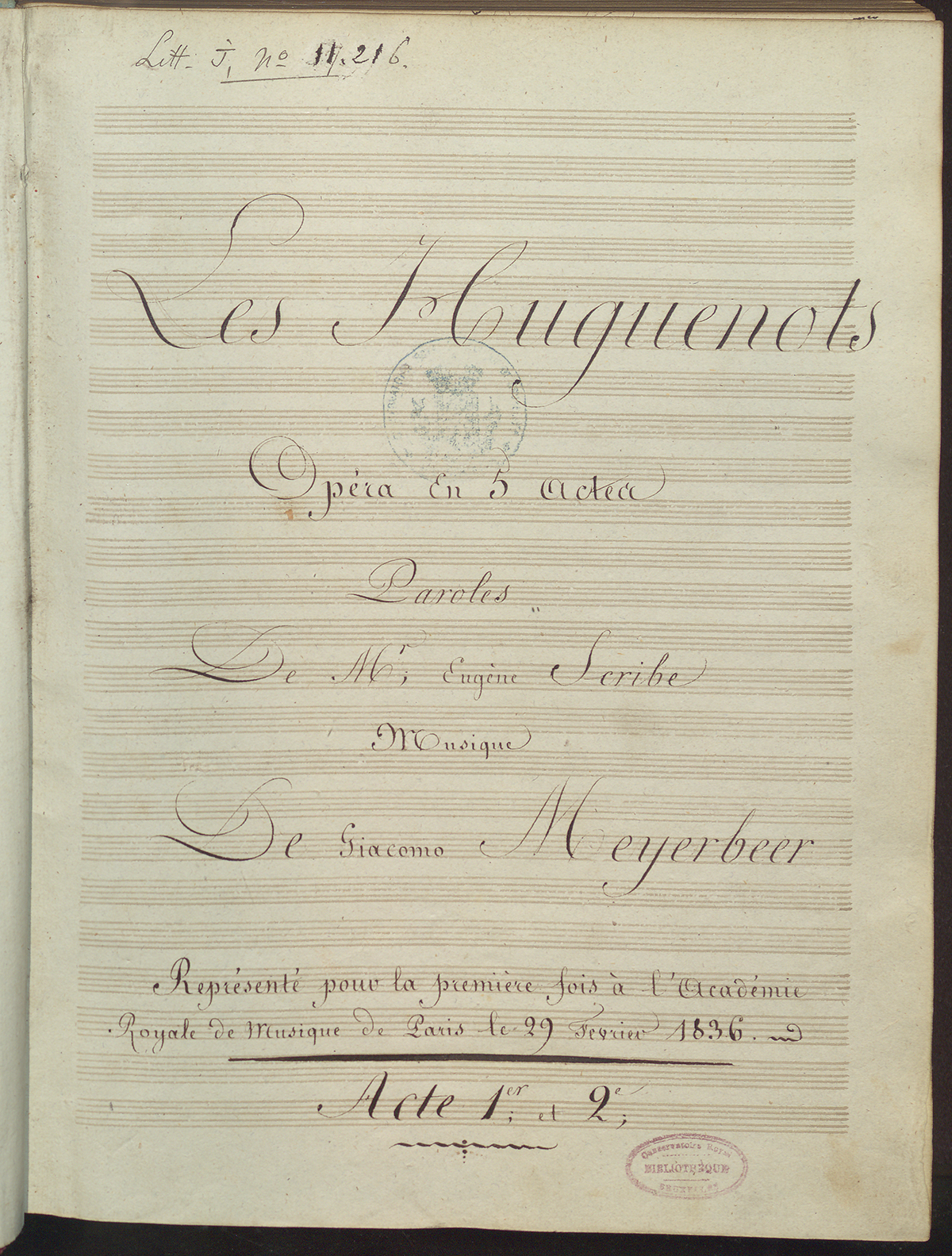
Les Huguenots. Opera in 5 acts, 1836
3 vol. (1101, 731, 765 p.)
31 x 24 cm (opened: 31 x 48-50 cm)
Coll. Royal Conservatories Brussels, B - Bc 11216
Donation of the composer to the king Leopold I of Belgium
In the 19th century, Giacomo Meyerbeer’s operas, set to librettos by Eugène Scribe, were as famous and admired as those of Rossini, Verdi or Wagner. Les Huguenots is a perfect example of this. This large-scale fresco is set against the backdrop of the St Bartholomew’s Day massacre of 1572. In five acts, it tells the story of the impossible love between the Catholic Valentine and the Protestant Raoul. In this work, Meyerbeer develops a sumptuous orchestral style, featuring dramatic contrasts, refined melodies and rich timbres.
The exceptional manuscript preserved in the library of the Brussels Conservatories was presented by Meyerbeer himself to King Leopold I through François-Joseph Fétis and the diplomat Hippolyte Vilain XIIII, shortly after the Paris premiere of the work in 1836. It illustrates the close ties between the composer and the Belgian court. Leopold I, a great opera enthusiast, regarded Les Huguenots as a masterpiece, both for its musical and dramatic qualities and for its message of religious tolerance.
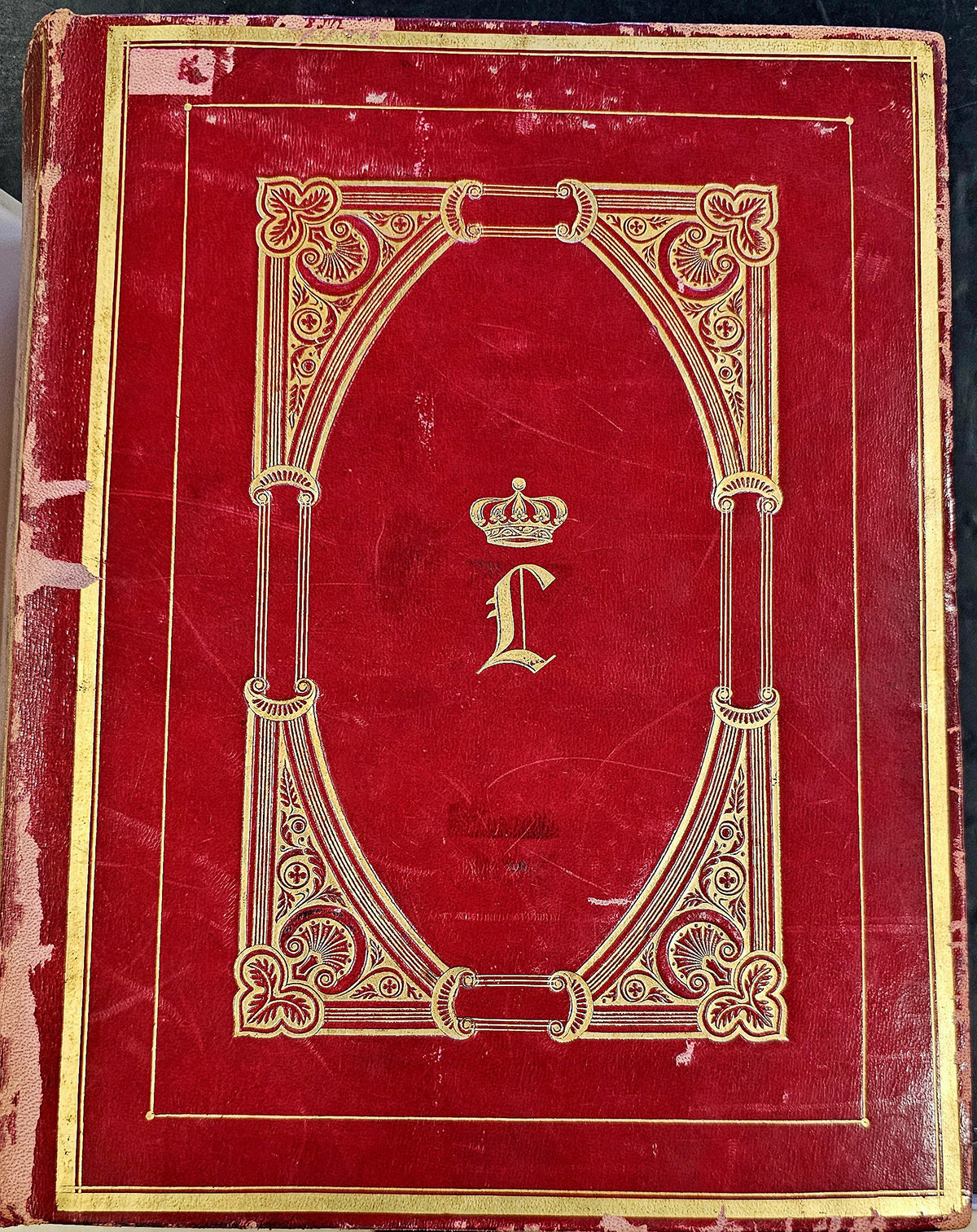
The three volumes are bound in red leather, decorated with gilt ornaments. In the center of each book cover is the gilded “L” of Leopold, topped with a small crown, also in gold. With the label of the bookbinder Esnault, Paris.